


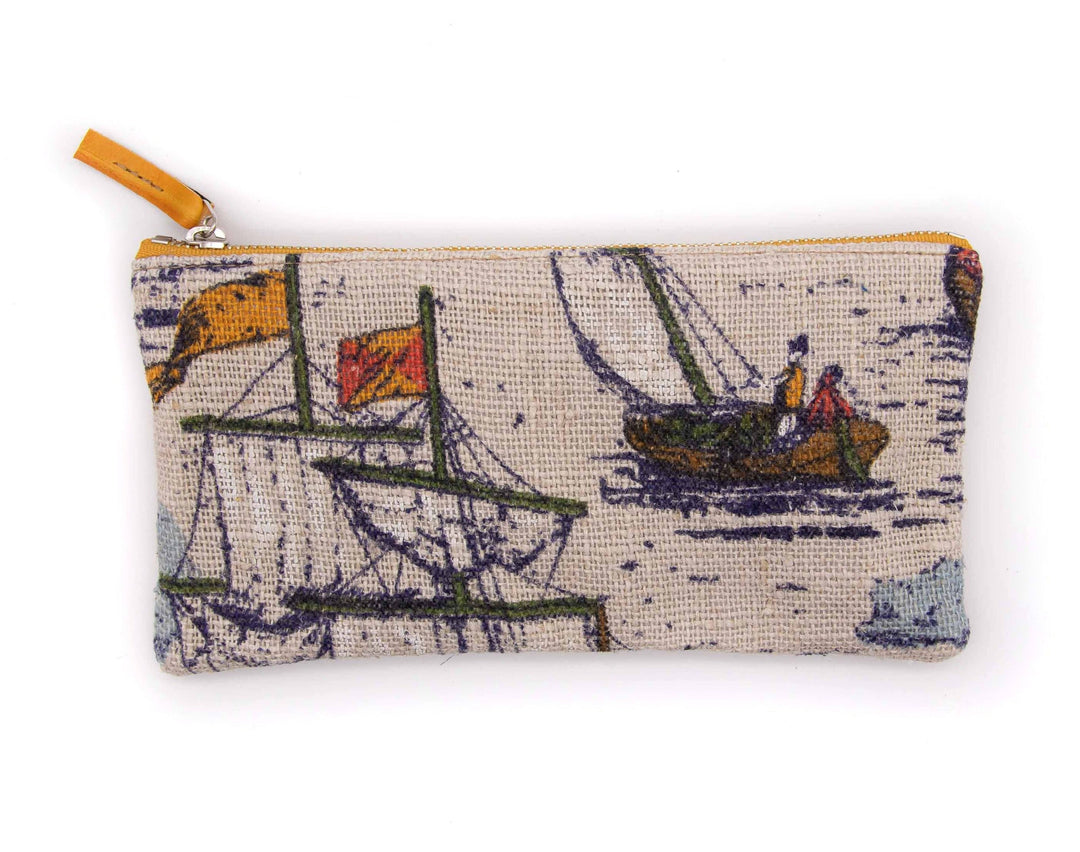
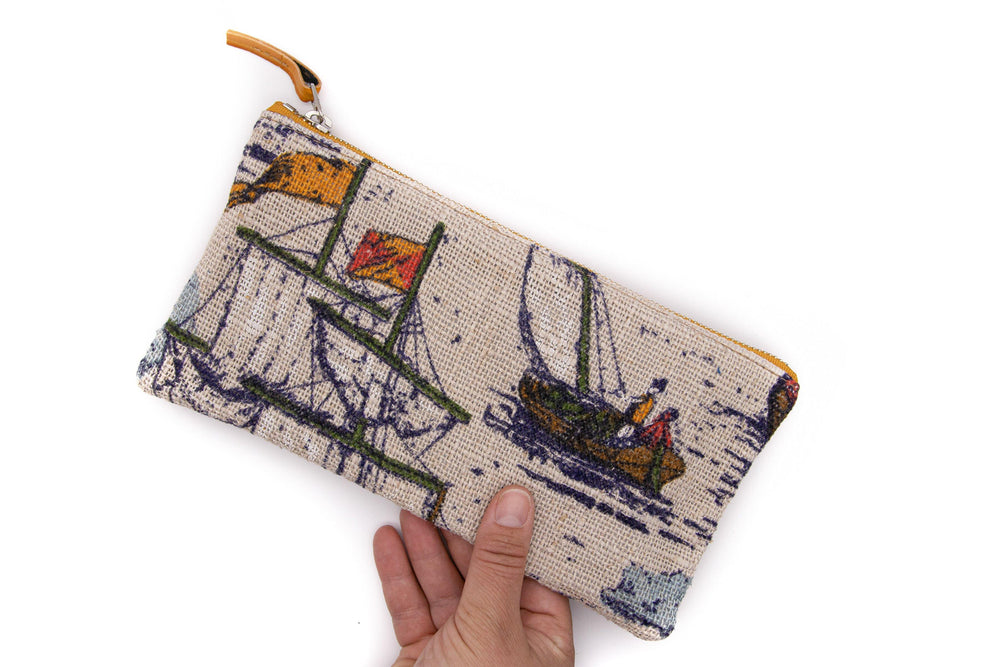
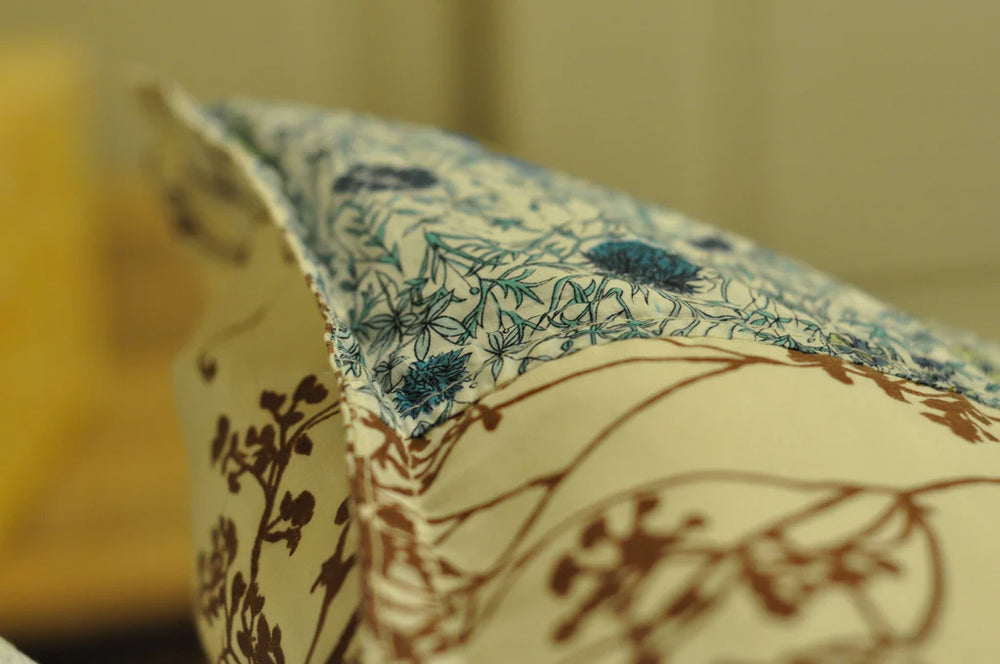
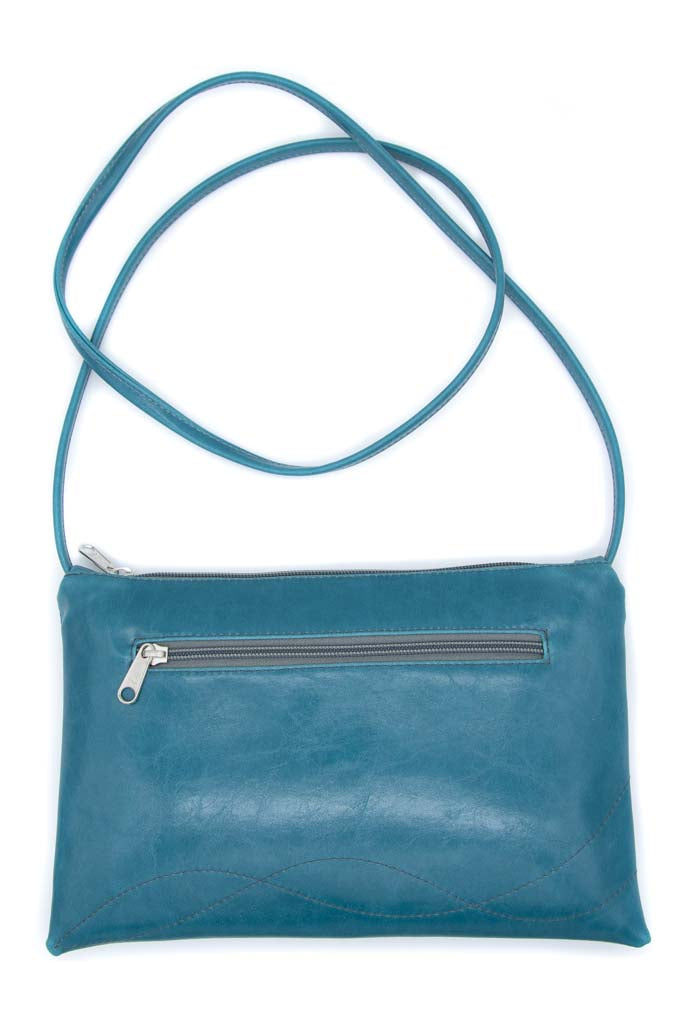
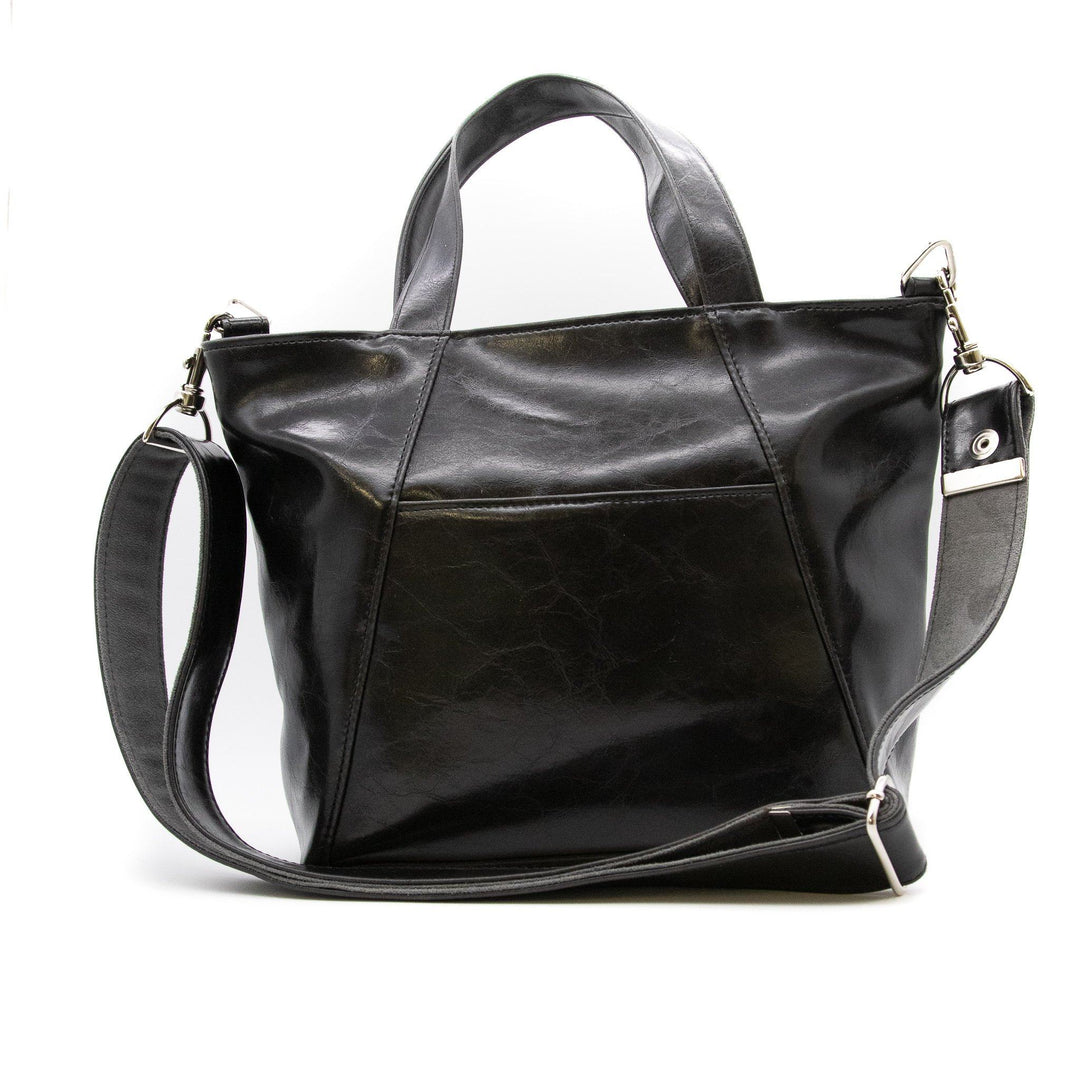
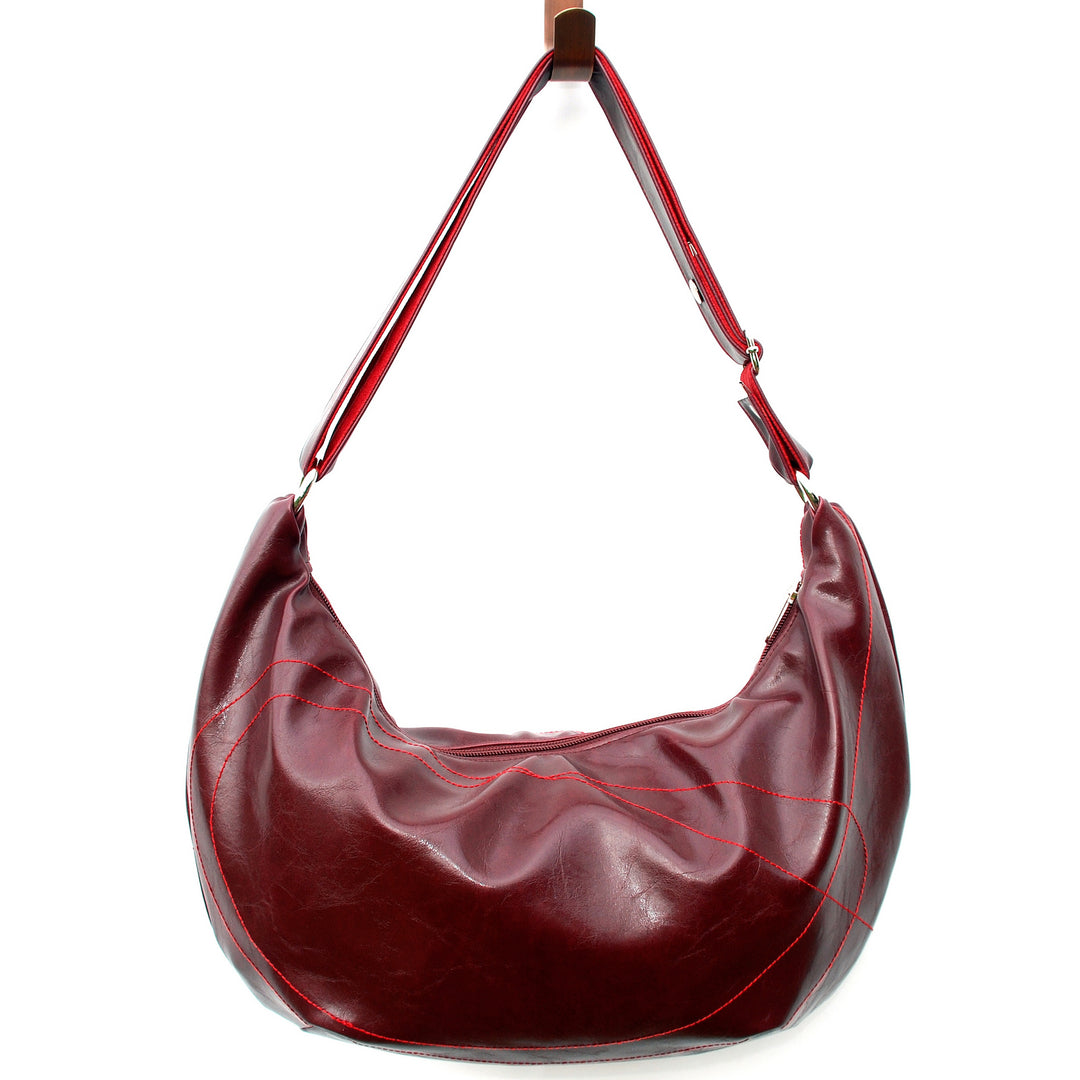
The vintage fabrics I collect are often what make each bag special—appearing as pockets, linings, or accent panels that give every piece its own character. The bags themselves are built around a durable base of coated canvas, which provides the structure and strength that allow them to handle daily life—from commuting to travel. If you’re curious about why I rely on it so heavily, you can read more about what coated canvas is and why I use it here.
Pairing long-lasting materials like coated canvas with reclaimed vintage textiles is also part of my broader commitment to sustainable small-batch production.
The vintage fabrics themselves come from many different places. Over the years I’ve developed several reliable ways to find these materials—from estate sales and antique dealers to textile recycling organizations and flea markets around the world.
Here are seven places I most often discover vintage fabrics and reclaimed textiles that eventually become Crystalyn Kae bags.
1. Estate Sales: Finding Vintage Upholstery & Hidden Textiles
Seattle has turned out to be one of the most fruitful places I’ve found vintage fabrics. Many of the homes here were built by engineers, executives, and designers connected to companies like Boeing. These houses often contain decades of carefully stored materials—sometimes entire closets of upholstery fabric or boxes of textiles that were never used.
Over the years I’ve discovered some remarkable fabrics at estate sales, including several batches of vintage Boeing airplane upholstery fabric that eventually became part of my bag collections.
👉 Read the story of how I discovered vintage Boeing airplane fabric at estate sales

The Boeing fabrics in my collection are actually a form of pre-consumer textile waste — prototype upholstery samples developed by mills, received and catalogued by Boeing at their Renton plant, and archived when an airline didn’t select them for production. Some of these fabrics sat in storage for over fifty years before becoming bags. Explore the Aerolíneas Argentina fabric →
Other times, estate sales reveal true fashion history. At one Seattle estate I discovered pieces belonging to 1960s designer Howard Blair, whose work is now represented in the Museum of History and Industry.
2. FABSCRAP: Rescuing Designer Leather & Textile Waste
One of the more unusual places I source materials is FABSCRAP, a New York nonprofit that collects unused textiles and leather from fashion brands and design studios before those materials are discarded.
While FABSCRAP carries many types of textiles, the materials I most often find there are unused leather hides from New York design studios. These aren’t scraps—they’re approval samples used during the design process. When brands develop a collection, they order multiple hides in different colors and finishes for evaluation. Once a material is selected and production moves overseas, the leather is reordered directly from the tannery in large quantities, leaving the original sample hides behind in the studio.
Multiply that process across dozens of styles and seasons, and it quickly adds up to hundreds of perfectly good hides with no clear next use.
Through organizations like FABSCRAP, these exceptional materials can be rescued and given a second life. For a small-batch designer like me, they’re an incredible resource: beautiful, high-quality leather that might otherwise never be used.
Some of my favorite pieces—like these card holders —have come from these rescued materials. Each piece of leather is different, which means the finished items always have their own unique character.
👉 Read more about the early days of FABSCRAP and my collaboration with them.

3. Vintage Fabric Wholesalers: Buying Materials in Bulk
Tracking down vintage wholesalers can be surprisingly difficult. Most of these connections happen through word of mouth—or occasionally they find you. One such dealer discovered me when I was selling my recycled fashion designs at Pike Place Market in Seattle.
What many people don’t realize is that I’m not typically cutting up random thrifted garments. When I find the right material, I source in quantity—often buying vintage garments or textiles by the pallet rather than the piece—so I can design an entire collection around it.
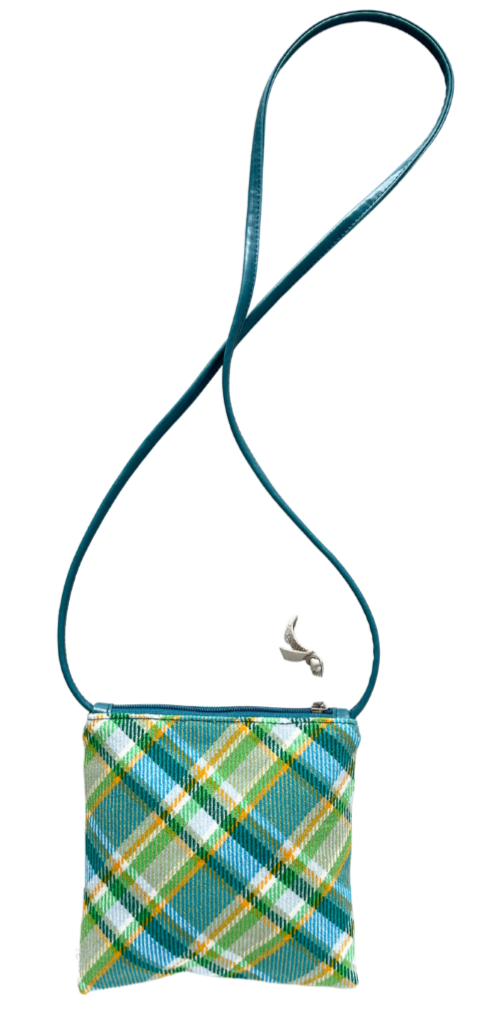
In fact, my very first bag collection in 2001 began with a large stash of vintage plaid pant legs—more than 200 pairs. I purchased them from a Seattle vintage wholesaler and transformed them into my earliest bag designs.
Working this way allows me to create cohesive small-batch collections while still using materials that already exist. Sometimes the most unexpected finds become the foundation for an entire season of designs.
4. Antique Dealers
Antique Dealers: Discovering Midcentury Upholstery Fabrics
Some of the most special materials I’ve worked with have come through long-standing relationships with antique dealers and vintage collectors. When you spend years working with reclaimed textiles, people begin to recognize what you’re looking for—and sometimes they reach out when something extraordinary turns up.
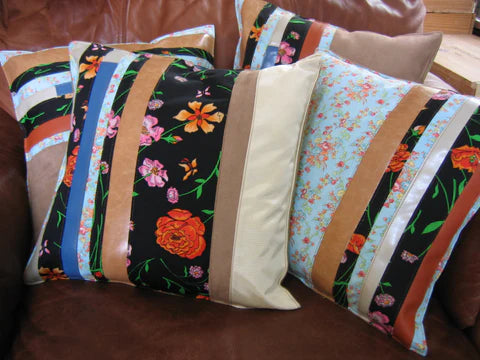
That’s exactly how I discovered a remarkable stash of midcentury upholstery fabric samples from the 1950s–1970s. Originally created for furniture, these fabrics were designed to be durable, richly textured, and visually bold—qualities that translate beautifully into handbags.
Those textiles eventually became the vintage velvet florals featured in our Mini Troubadour collection.

5. Flea Markets While Traveling: Global Textile Inspiration
While most of my materials come from estate sales, wholesalers, and organizations like FABSCRAP, I’m always on the lookout for interesting textiles when I travel. Flea markets around the world—from France to Argentina to Italy—are incredible places to see historic textile techniques, vintage leatherworking tools, and fabrics that simply aren’t common in the U.S.
Sometimes I’ll bring home a bolt of fabric or a small stash of materials that catches my eye. Other times, the discoveries are purely inspirational—patterns, textures, and ancient tools that influence future designs.
More than once, I’ve found myself carefully packing fabric into a suitcase or shipping it home so it can eventually find its way into the studio.
👉 Read more about some of my early textile-hunting adventures here

6. Designer Deadstock Fabrics: Mood, Promenade & Online Finds
Most of the materials I use come from vintage sources, estate sales, or reclaimed textile networks. But every once in a while I need something very specific—perhaps a particular color, weight, or texture to complete a design.
In those moments I’ll occasionally search through professional suppliers like Mood Fabrics or Promenade Fine Fabrics, which specializes in designer deadstock. Sometimes I’ll also keep an eye on eBay for unusual vintage yardage that surfaces from old sewing rooms or fabric warehouses.
Designer deadstock refers to high-quality fabrics originally produced for fashion brands but never used in final production—often discontinued colors, small yardage runs, or materials left behind after the sampling process.
It’s not where most of my materials come from, but when I need something precise, these sources can be surprisingly useful.
7. Wild Card Unexpected Finds: When Extraordinary Fabrics Appear
Of course, sometimes the best materials show up where you’d never think to look.
When my studio was once located in a building that also housed film prop stylists, a movie production wrapped and some of the set furniture was being cleared out. One of the pieces featured a striking basketweave velvet textile that immediately caught my eye.
The texture and weight were incredible—exactly the kind of fabric that makes a designer’s imagination start racing. I brought it into the studio, and it eventually became one of the defining textiles in a winter bag collection inspired by vintage textures and 1970s color palettes.

Moments like that are a reminder that while I have clear strategies for sourcing materials, I’m always keeping my eyes open. The most interesting textiles often appear when you least expect them.
Over time I’ve developed many ways of sourcing unusual materials—but some of the best finds happen when you’re simply paying attention. When I discover a fabric that speaks to me, it comes back to the studio, waits patiently on the shelf, and eventually becomes part of a bag unlike any other.









Your hunt for the perfect fabrics reminds me of a treasure hunt LOL! I bet it also takes a lot of patience to find such gorgeous, vintage fabrics! Love this post!
Thank you so much for linking the newsletter for the estate sales! I never even thought of checking there for unique fabrics! I’ll definitely be going to some to hunt for the perfect fabric for a vintage costume I’m making! I might even need one of your beautifully crafted, vintage fabric bags to match!
I adore my one-of-a-kind Crystalyn Kae bag, so it’s very exciting to learn about where the fabrics for it came from! I follow you on Instagram and I’ve seen your wonderful posts about Fabscrap, but I never knew that you handcraft your purses from fabric found at estate sales, antique dealers, and thrift shops! How amazing! This just makes your bags even more unique!
Leave a comment